
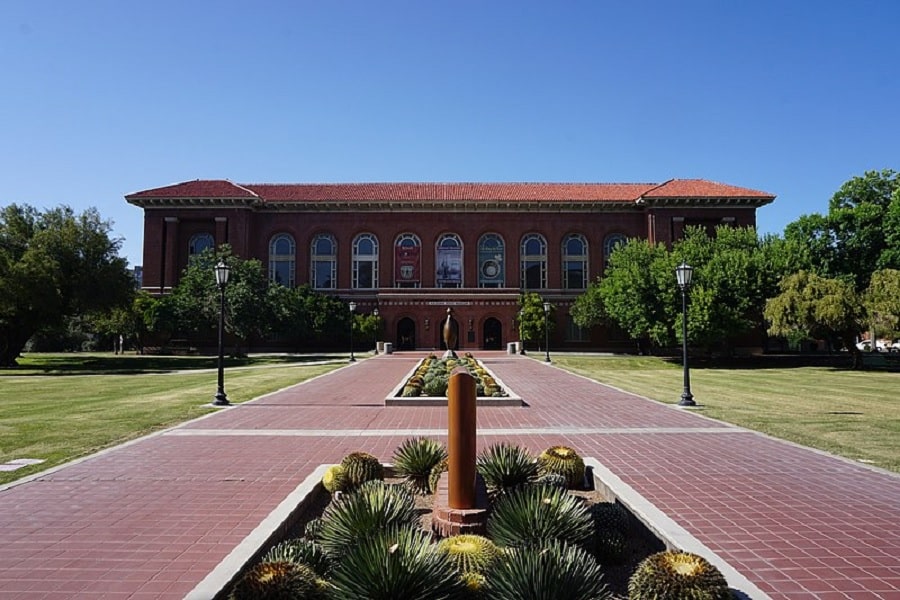
Arizona State Museum: Oldest & largest for anthropological research in the USA
Established back in 1893, the Arizona State Museum is both the oldest and the largest anthropological research museum in the Southwest. It boasts expansive collections that are exceptional resources for studying, teaching, and the appreciation of the region’s human history.
Visit the Arizona State Museum to see the ancient and enduring Native cultures of the region for yourself. Discover the content-rich exhibits and dynamic docent tours. Also, see the engaging digital and in-person programs, master classes, enriching travel experiences, and a research library and archives.
See the Yaqui & Mayo Masks in the James S. Griffith Collection
Wooden masks worn by Pascola dancers hold deep ritual significance. This is true for both Mayo and Yaqui communities of southern Arizona and northern Mexico. Showcasing masks from ASM’s James S. Griffith Collection, this exhibit examines masks and related traditions that are integral to the lifeways of the Mayo and Yaqui people. Guest curated by Santiago Benton (Mayo) and Yaqui Pascola elders, in collaboration with Dr. Griffith and Arizona State Museum.
Uncover the legacies of the Mexican Sarape
Through the language of color and design, the iconic Mexican Saltillo sarape expresses Indigenous, Spanish, and Mexican history. Additionally, it reveals the traditions, and textile techniques. Co-curated by ASM with Zapotec textile artist Porfirio Gutiérrez, this exhibit explores three key subjects. Those include the origins, spread, and role today of the Saltillo sarape design.
Learn about the cultivation of wild plants and insects for producing dyes. Also, see how the Porfirio Gutiérrez Studio is helping a new generation of weavers deepen their connection to Zapotec culture. This also helps us embrace a path toward sustaining their identity for the future. On view are historic textiles from Mexico and New Mexico. Also, it includes Indigenous communities and contemporary textiles. Those include six woven by Gutiérrez specifically for this exhibit, and related objects, photographs, illustrations, and videos.
Come see the Bio-archaeology Laboratory
Research is largely conducted in the Human Osteology Laboratory, located on the third floor of ASM North. The lab is equipped with abundant table space. That space accommodates an anatomical comparative collection, standard osteological measurement equipment – various calipers and osteometric boards. Also, it accommodates a digitizer, computer and internet access, and natural or artificial lighting.
Point of Pines Pottery Research – revealed
Existing museum collections are critically important resources. As such, they present exciting opportunities for revealing new knowledge about the archaeological record and infinite possibilities for teaching. Among ASM’s most important collections is the large and exquisitely documented assemblage. Recovered during the 1940s and 1950s, these were a result of the archaeological field school at Point of Pines Pueblo.
It was on the San Carlos Apache Indian Reservation where Emil Haury, then ASM director, encountered what is now thought of as the best-documented case of prehistoric migration in the Southwest. Maverick Mountain Series pottery, made locally by immigrants from the Kayenta region of far northeastern Arizona and southeastern Utah, was first described at Point of Pines and helped to tell this migration story. Unfortunately, the collections resulting from these important excavations were never fully analyzed nor published.